Energy, internet and trade. All three depend on the ocean: seawater cools power plants, pipelines and jetties bring in oil and gas, cables on the seabed carry the internet, and ports move the world's goods.
And we need more of each than ever. Every AI on Earth runs on power, and reaches the world through cables under the sea. The world’s trade and fuel still move by ship. All three pass through the same few chokepoints, and all three are under threat, from Hormuz to the Red Sea to the Baltic.
Underwater, they have no protection. Things break overnight, and no one finds out until it's too late. For example:
Energy. An anchor hit a California pipeline. Unseen for 8 months. $160M loss.
Internet. An anchor cut Baltic cables in one night. €50–60M for one repair.
Trade. Divers mined four tankers at Fujairah. Nobody saw. A closed major US port costs $50–150M a day.
That's because checks are done by hand, by divers or a ship, a few times a year. It's slow, costly and too late.
So we put a robot right where things go wrong, and it stays there, 24/7: at your jetty, intake or port. When its sonar spots an anchor, a jellyfish swarm or a mine, it goes to look. You see it in minutes, not months.
99%of internet traffic between continents runs on cables on the seabed. TeleGeography
80%of world trade, by volume, moves by sea. UNCTAD
61%of the world's oil moves by sea. US EIA
$2.6Tof value the ocean economy added in 2020. OECD
02Products
The undersea protection stack.
Guard · video to come
The full stack
That robot is the first of a family, run by one brain.
Learned to drive itself in simulation with its real sensors, then in the water. Moved the same brain to a second, different hull, and it docked itself on the first attempt in murky water with visibility under a metre. 5 of 6 since.
Object detection with range from one camera, stereo depth to the millimetre, and pose and hand tracking, all on the robot’s own computer. Bench-tested; underwater next.
Image to come
Oct 2026Gulf port trial proposed
A maritime services company at a Gulf port near the Strait of Hormuz asked us for a trial. One-month pilot proposed, with a product video of how it would work there.
Every data centre, EV, robot and wind turbine runs on the same few: cobalt, nickel and manganese for batteries, rare earths for every motor. China refines 91% of the world’s rare earths and makes 94% of its magnets. In 2025 it slowed exports. Car plants stopped. Tesla’s robot was hit.
The biggest untouched supply lies on the seabed: potato-sized rocks holding more cobalt than all the reserves on land. Yet we know the Moon better than our own seabed. Only 27% of it is mapped.
The race is on. China holds the most seabed claims, Japan is already lifting mud from 6,000 m, and the US is fast-tracking permits.
SpaceX built the rocket that made space cheap, and an industry followed. We’re building that for the ocean.
$24Tvalue of the ocean’s key assets. WWF
21B tof metal-rich nodules in one Pacific zone. USGS
3×more cobalt in that zone than all land reserves. Paulikas et al.
<0.001%of the deep seafloor ever seen by humans. Science Advances
01 · TodayGuardSees. Lives at your site and goes to look the moment something changes.
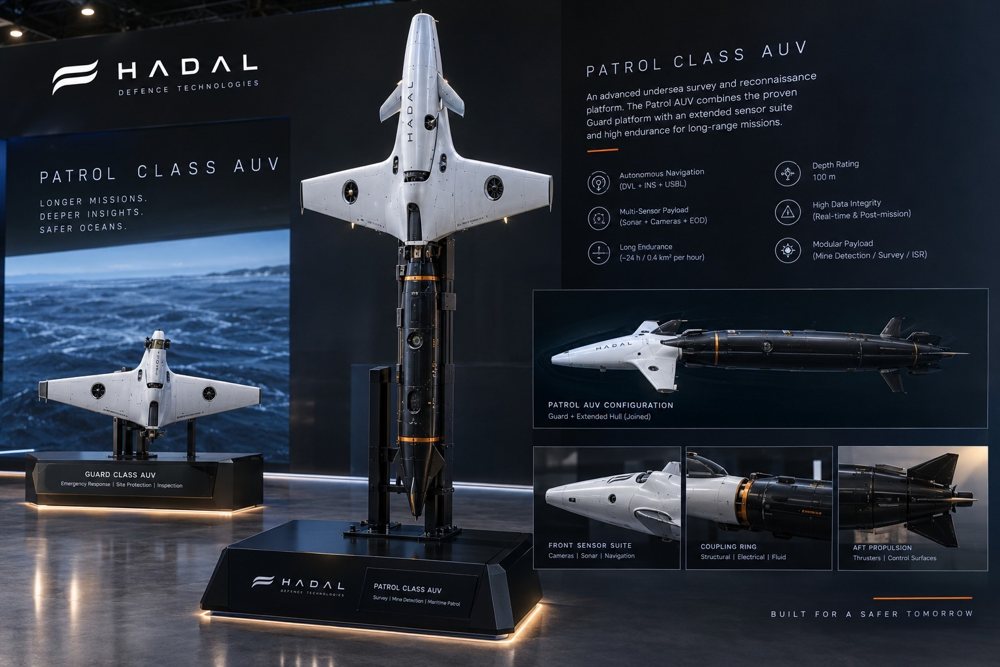
02 · NextPatrolFollows. Rides a small autonomous boat and runs cables, pipelines and routes.
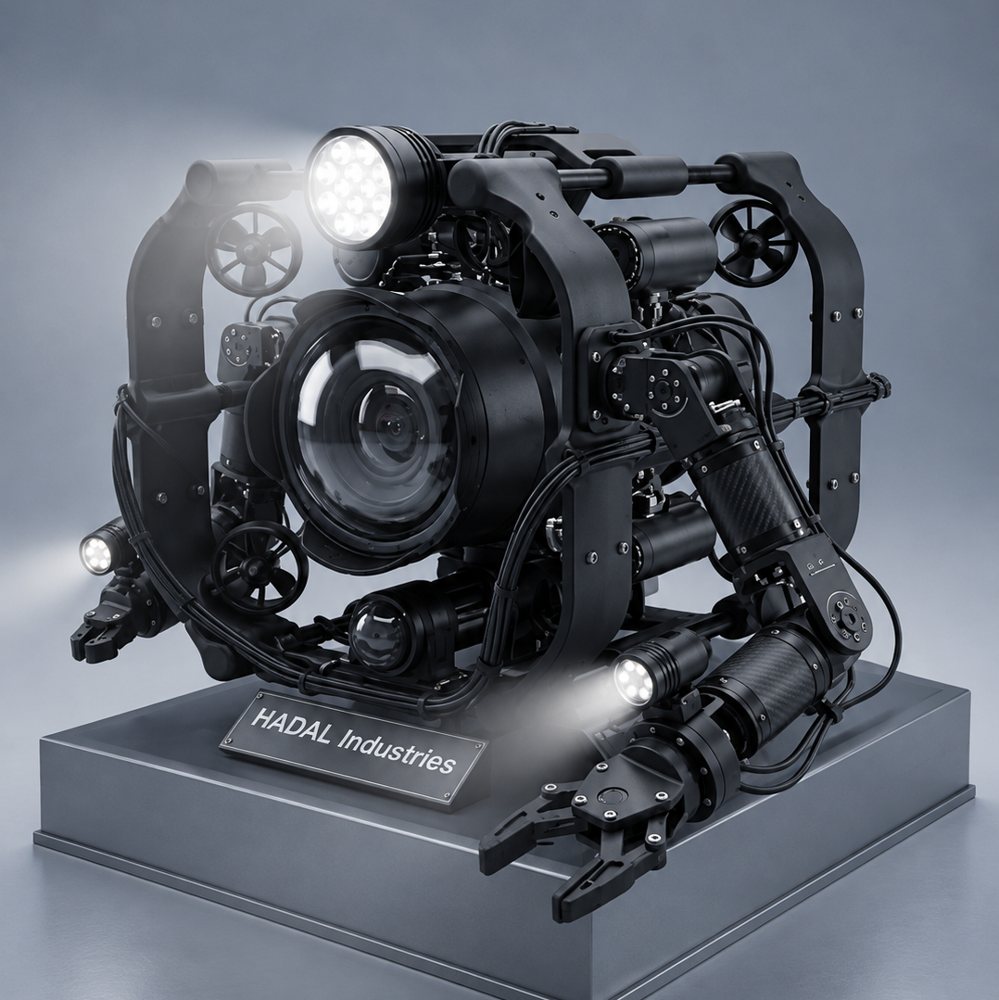
03 · NextWorkFixes. A work robot that cuts ropes and nets, clears debris and cleans, then digs out and reburies cables.
04 · LaterExploreFinds. Maps the seabed and brings back samples of the metals the world needs next.
MoonshotCarryTakes them anywhere. A mothership that carries the fleet to the deep and back, and supplies through a blockade.
Robot submarines that live at the site they protect. The dock’s sonar watches the water all the time. When something changes, the robot goes to look, sends back video, then comes home to charge.
Who do you start with?
Ports, oil jetties and the seawater intakes of power and desalination plants, plus naval harbours. Guard starts there; Patrol then brings cables, pipelines and routes.
Is it for defence or commercial?
Both. Commercial sites first, navies alongside. Same brain in every robot.
How is it launched and recovered?
It lives dry on its dock. When the sonar raises an alert, the dock puts it in the water and it swims off. When it comes back, the dock catches it, lifts it out and charges it.
What does Patrol add?
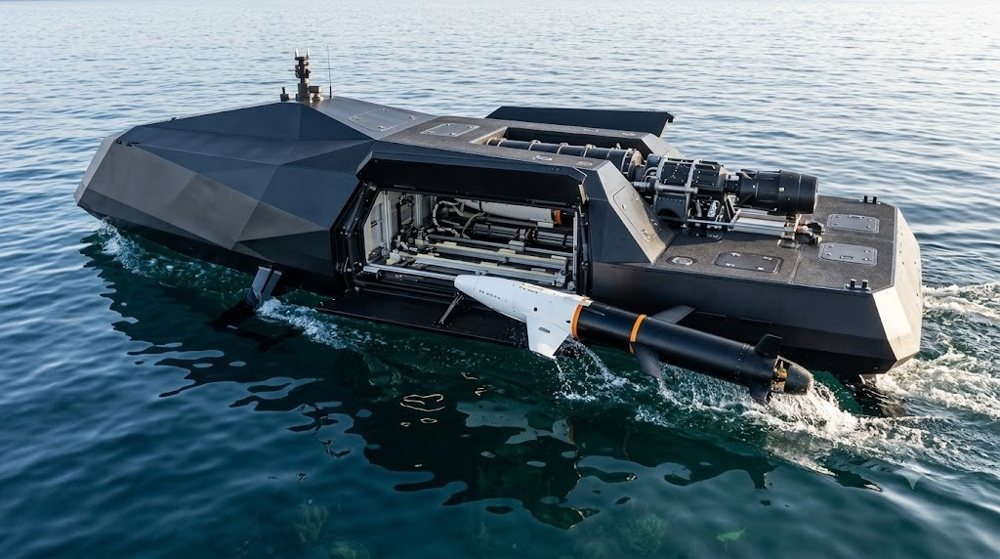
Patrol covers lines and open water: cables, pipelines and shipping routes. A small autonomous surface boat carries it out, relays its data and brings it home.
How does it navigate underwater?
GPS does not work underwater, so the robot starts from a known fix, tracks its own movement while submerged, and is corrected by sound from its dock or boat.
How does the data get back?
Short messages travel by sound, live video travels over an optical link close in, and the full record uploads on the dock. Patrol reports through its surface boat. It never needs to surface.
Does it work in murky water?
Yes. Sonar is the main sensor, and murk doesn’t stop it. We test every week in murky water, and the robot switches between acoustic and optical links before one drops.
Won’t the robot get covered in growth?
It lives dry on the dock between jobs and only goes into the water to work, so nothing has time to grow on it.
What happens if something fails?
If it loses its link, it finishes the leg and comes home. If a thruster fails, it stops and surfaces.
How does a pilot work?
We start with one site as a paid pilot. We install the dock, the sonar starts watching, and the robot checks your structure every week and whenever something changes. Then it continues as a monthly fee per site.
What do I get?
An alert the moment the sonar sees something new. A same-day check by the robot, with video and a short report. A weekly report of what changed. A monthly record for your safety and compliance files. Your data stays yours.
Do you replace divers and ROVs?
Today we replace the routine look and the emergency look. Next, our work robot takes on the small jobs: cutting ropes and nets, clearing debris, cleaning. Big repairs still need a ship and divers; we find the problem early and guide them to it.
Why build the whole stack?
Owning the robot, the dock, the link and the software is how a fleet stays cheap, and how it keeps working when the surface doesn’t.